
Hospital Oxygen Generators
On-site PSA oxygen generation for hospitals: continuous medical oxygen supplied directly into the hospital pipeline network.
Hospital Oxygen Generators
At BERG GaseTech , our OXYBERG ® oxygen generators are engineered to meet the demanding needs of medical facilities. Utilizing advanced Pressure Swing Adsorption (PSA) technology, these systems provide a continuous, high-purity oxygen supply directly on-site, reducing reliance on traditional hospital oxygen cylinders. OXYBERG® medical oxygen configurations are engineered by BERG GaseTech GmbH under an ISO 13485:2016-certified quality management system whose scope includes development, production, distribution and commissioning of O2 PSA generators for the production of medical gases. Use in a hospital medical gas system is subject to the delivered configuration, gas-quality verification, reserve/backup supply design, applicable national requirements, intended use, commissioning/validation and project-specific regulatory approval.
Hospitals operate around the clock, and oxygen consumption changes constantly depending on patient load, treatment intensity, and emergency admissions. Traditional cylinder or liquid oxygen deliveries cannot always react fast enough to sudden demand peaks. On-site PSA oxygen generators instead produce oxygen continuously from ambient air. On-site oxygen generation can significantly reduce dependence on external cylinder or liquid-oxygen deliveries. The required reserve/backup oxygen strategy must be defined according to the complete system design, applicable standards and local regulations.
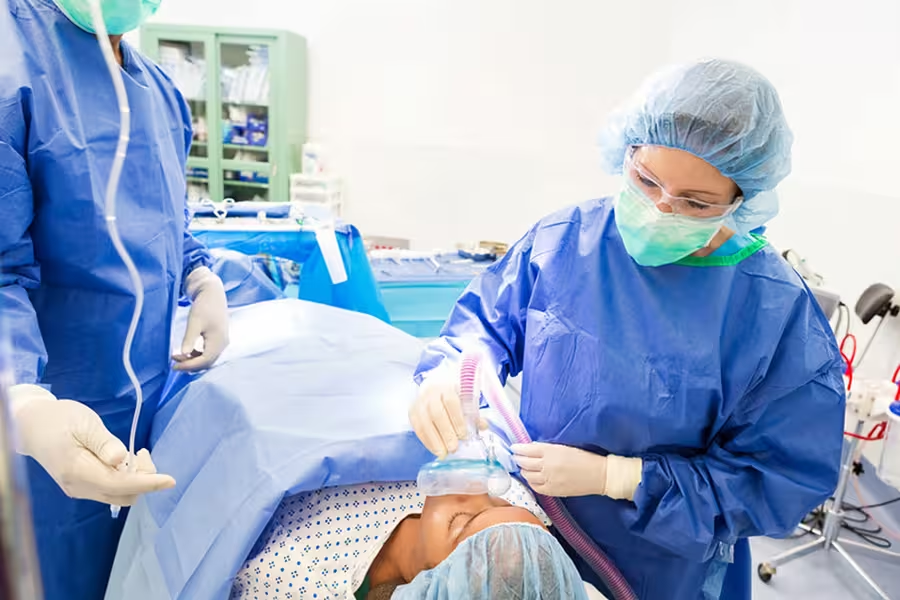
Advancements in Healthcare Infrastructure and the Essential Role of Oxygen
Hospitals operate around the clock, and oxygen consumption changes constantly depending on patient load, treatment intensity, and emergency admissions. Traditional cylinder or liquid oxygen deliveries cannot always react fast enough to sudden demand peaks. On-site PSA oxygen generators instead produce oxygen continuously from ambient air. On-site oxygen generation can significantly reduce dependence on external cylinder or liquid-oxygen deliveries. The required reserve/backup oxygen strategy must be defined according to the complete system design, applicable standards and local regulations. Through adsorption separation technology, nitrogen is removed from compressed air and oxygen is fed directly into the hospital medical gas pipeline system. The generator automatically follows consumption fl
Why Oxygen Is Essential in Hospitals?
Medical oxygen functions as a primary therapeutic gas in modern treatment processes. Oxygen is used across a wide range of clinical applications in hospital care. Hospital medical gas systems place high demands on the stability of pressure and purity. Maintaining constant pressure and purity is essential for accurate performance of medical devices and patient treatment safety.
Oxygen Generators for Hospitals
Replacing Hospital Oxygen Cylinder Deliveries with On-Site Oxygen Generation
Hospitals operate continuously, and oxygen demand varies throughout the day. Deliveries of cylinders or liquid oxygen cannot always respond instantly to sudden demand increases. On-site PSA oxygen generators produce oxygen directly from ambient air during operation. Medical oxygen is generated through adsorption separation, where nitrogen is removed from compressed air and oxygen is supplied directly into the hospital pipeline network. The system is designed to follow consumption changes within the configured pressure and purity range. Final gas quality must be verified for the delivered system and operating conditions. Request Your Personalized
Stable & Reliable Oxygen Supply
A PSA oxygen generator for hospitals ensures continuous oxygen production 24 hours a day, 7 days a week. Integrated monitoring systems maintain consistent purity and pressure levels.
Reduced Operating Costs
Compared to cylinder supply or liquid oxygen tanks, an on-site oxygen supply hospital system significantly lowers long-term operational expenses by eliminating: – Cylinder transport costs – Rental fees – Refilling charges – Emergency delivery risks
Independence from External Suppliers
On-site oxygen generation can significantly reduce dependence on external cylinder or liquid-oxygen deliveries. The required reserve/backup oxygen strategy must be defined according to the complete system design, applicable standards and local regulations.
Compact Plug-and-Play Design
Modern hospital oxygen generator units are compact and modular. Systems can be installed directly within hospital technical rooms and connected to the existing pipeline network.
Low Energy Consumption
Energy-efficient compressors and optimized adsorption cycles ensure minimal power usage while maintaining high performance.
Fully Automated Operation
Advanced control panels provide: – Real-time oxygen purity monitoring – Pressure control – Alarm systems – Remote monitoring options
What Our hospital oxygen machine Do for Hospitals
1. Intensive Care Units (ICU) Intensive care units place high demands on the stability of pressure and purity in the medical gas system. Suitability for a specific installation depends on the delivered configuration, gas-quality verification and project-specific regulatory approval. 2. Operating Rooms Operating rooms place high demands on the continuity of the medical gas supply. Suitability for a specific installation depends on the delivered configuration, gas-quality verification and project-specific regulatory approval. 3. Emergency Departments Immediate Availability: Emergency treatments often create sudden peak oxygen demand. The generator automatically adapts to increased consumption. 4. Neonatal Care Sensitive Respiratory Support: Newborn respiratory therapy requires precise oxyge
1. Intensive Care Units (ICU)
Intensive care units place high demands on the stability of pressure and purity in the medical gas system. Suitability for a specific installation depends on the delivered configuration, gas-quality verification and project-specific regulatory approval.
2. Operating Rooms
Operating rooms place high demands on the continuity of the medical gas supply. Suitability for a specific installation depends on the delivered configuration, gas-quality verification and project-specific regulatory approval.
3. Emergency Departments
Immediate Availability: Emergency treatments often create sudden peak oxygen demand. The generator automatically adapts to increased consumption.
4. Neonatal Care
Neonatal care places particularly high demands on the accuracy and continuity of the oxygen supply. Suitability for a specific installation depends on the delivered configuration, gas-quality verification and project-specific regulatory approval.
5. General Wards
Daily Oxygen Therapy: Continuous oxygen therapy for recovering patients requires stable pipeline distribution.
6. Isolation & Respiratory Treatment Areas
High-Flow Oxygen Therapy: Respiratory infections and pulmonary conditions significantly increase oxygen consumption rates.
7. Backup Infrastructure Support
Supply Security: The generator works alongside backup systems to ensure redundant oxygen availability. We are proud to have equipped many hospitals around the world C ONTACT US TODAY FAQs 1. Can a hospital oxygen generator replace hospital oxygen cylinder supply completely? Yes. An on-site PSA oxygen generation system can serve as the primary oxygen source for the medical gas pipeline network. The
Need sizing for your application?
Send us your consumption profile and operating data. Our engineering team will size the generator and confirm the configuration.
Frequently Asked Questions
Yes. An on-site PSA oxygen generation system can serve as the primary oxygen source for the medical gas pipeline network. The generator continuously produces medical oxygen according to real-time demand, while existing cylinder manifolds can remain as backup reserves for redundancy and emergency compliance.
OXYBERG® configurations are engineered to a defined oxygen purity, typically in the 90–95 % range. Integrated analyzers monitor purity and pressure during operation. Final gas quality must be verified for the delivered system and operating conditions.