OXYBERG® Pressure Swing Adsorption (PSA) Oxygen Generators
OXYBERG® PSA oxygen generators produce oxygen on site from compressed air, at purities from 90 % to 95 % and outputs from 1.5 to 197.4 Nm³/h across 18 sizes. You replace cylinder deliveries, liquid-oxygen tanks and their recurring contracts with a skid that runs on the compressed air you already generate, and you keep purity, flow and outlet pressure under your own control. Engineered and manufactured in Germany, with standard wear parts on the open market, three years warranty as standard and up to five with a service contract.

What is a Pressure Swing Adsorption (PSA) Oxygen Generator?
A Pressure Swing Adsorption oxygen generator is an on-site machine that separates oxygen from compressed air, without any chemical reaction and without cryogenic cooling. Compressed air at 5 to 10 bar passes through a bed of zeolite molecular sieve, a mineral adsorbent whose pore structure holds nitrogen back under pressure. Nitrogen, carbon dioxide and residual moisture stay on the sieve, while oxygen together with the small argon fraction of the air passes through and collects in a buffer tank. Dropping the pressure regenerates the sieve, so nothing is used up in the process: the only continuous input is compressed air, and the only continuous output is oxygen at the purity you set, anywhere from 90 % to 95 %.
Because argon behaves almost like oxygen in this separation, it travels through the sieve with the oxygen and sets a natural ceiling around 95 % for any PSA oxygen generator. That band still covers the large majority of industrial and medical-grade oxygen demand: aquaculture and wastewater at the lower grades, metal, glass and oxidation processes in the middle, and hospital supply at 93 % under European Pharmacopoeia Monograph 2455. Where a process genuinely needs more than 95 %, the argon has to be removed cryogenically, which is a different and much larger class of plant and is not part of the OXYBERG® range. This page is the technology-deep companion to the broader oxygen generator overview.
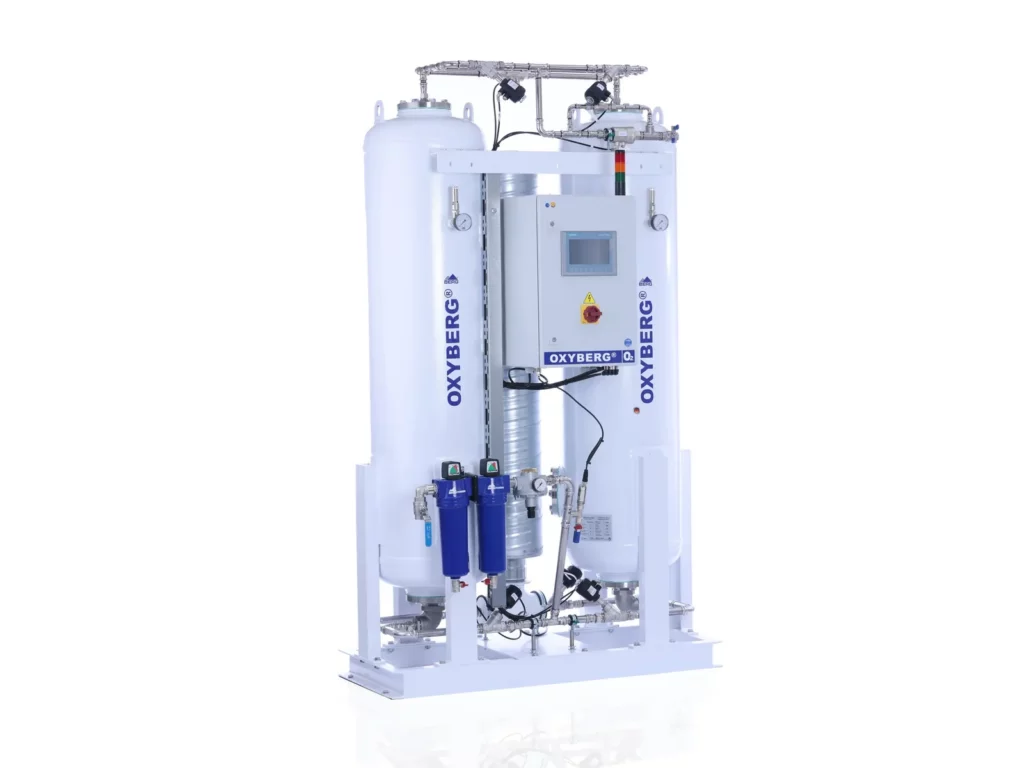
OXYBERG® PSA Oxygen Generators: Technical Specifications
Five Adjustable Purity Grades
The same generator delivers 90 %, 92 %, 93 %, 94 % or 95 %, set in the controller. A higher grade trades throughput for purity: at 95 % a given OXYBERG® produces less oxygen than at 90 %, so purity and flow are chosen together.
Scalable Across 18 Sizes
OXYBERG® 500 to 4000 covers 1.5 to 197.4 Nm³/h of oxygen, from a single workshop or fish-farm line up to plant-level supply drawing well over a hundred Nm³/h.
Standard Wear Parts
Filters, valves and the zeolite molecular sieve are off-the-shelf and available on the open market. No proprietary lock-in once the generator is installed.
Cycle Engineered for Sieve Life
Cycle timing and pressure equalisation are tuned to protect the zeolite. Clean, dry, oil-free compressed air keeps the sieve effective and wear-part changes on planned, predictable intervals.
Pick the OXYBERG® for your purity and flow target.
Why Generate Oxygen On-Site with PSA
Independence from Liquid-Oxygen Supply
End annual price increases, multi-year tank rental and delivery interruptions. A PSA generator runs on compressed air you already produce, and a typical site reaches payback against liquid-oxygen supply within two to three years.
Specify Purity Honestly, Not at the Ceiling
Run the generator at the grade the process needs. Because oxygen output falls as purity rises, specifying 95 % where 92 % would do means a larger generator and more compressed air for the same delivered oxygen. Matching purity to the application is the biggest single lever on both capital and running cost.
Stable Purity and Outlet Pressure
Cylinder changeovers and tank pressure drops feed variability into sensitive processes such as aquaculture and wastewater aeration. On-site generation holds a defined purity and a steady outlet pressure, produced on demand with no evaporation losses and no refill contamination.
Right-Sized to Your Demand
The 16-size OXYBERG® family covers 1.5 to 197.4 Nm³/h. As demand grows you step up inside the family rather than re-engineering the supply logistics from scratch.
How does Pressure Swing Adsorption work?
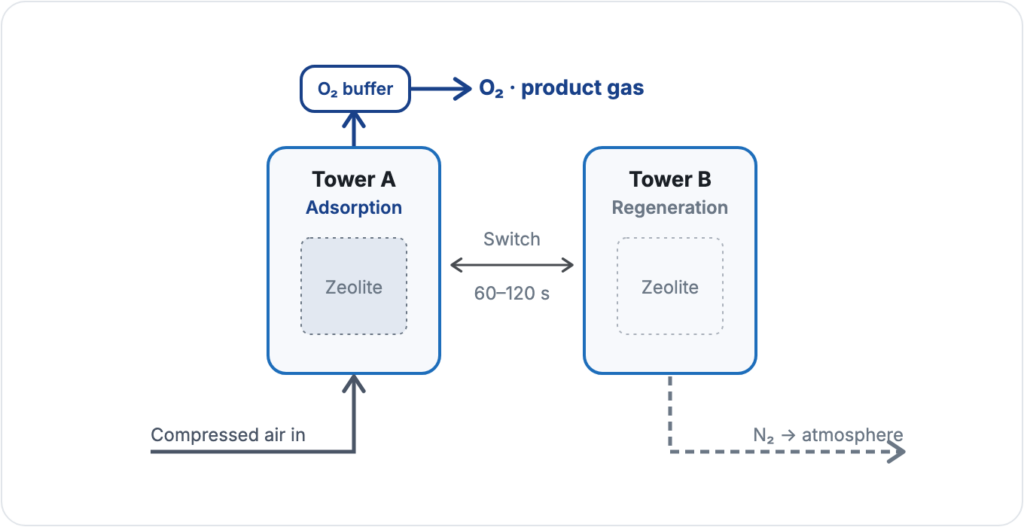
A PSA oxygen generator runs two adsorber towers in alternation. While one tower is under pressure and delivering oxygen, the other is at atmospheric pressure regenerating. Each tower typically completes a cycle every 60 to 120 seconds, so the buffer tank downstream sees a continuous oxygen flow rather than a pulsing one.
The five steps of the cycle:
- Adsorption (Tower A). Treated compressed air enters the adsorber at 5 to 10 bar. The zeolite molecular sieve holds back nitrogen, carbon dioxide and residual moisture. Oxygen, with the small argon fraction of the air, passes through the top of the tower and fills the buffer tank.
- Pressure Equalization (A → B). Before Tower A is taken offline, part of its oxygen stream is routed into Tower B. This pre-pressurises the second tower, saves compressed air and speeds up the changeover.
- Desorption (Tower B). Tower B is dropped to atmospheric pressure. The nitrogen held on the sieve is released and vented back to atmosphere, where it came from. No chemicals and no waste stream to treat.
- Purge (Tower B). A small oxygen back-flow sweeps the residual nitrogen out of Tower B, preparing the sieve for the next adsorption step.
- Switch. Tower B takes over oxygen production while Tower A regenerates. The cycle repeats, day after day, for the life of the generator.
OXYBERG® PSA Models: 18 Sizes, 5 Purity Grades
Across the OXYBERG® range it takes on the order of 11 m³ of compressed air to make 1 m³ of oxygen, and that ratio stays roughly constant from 90 % to 95 %. Raising the purity grade lowers the oxygen a given model delivers, so the matrix pairs output with air demand for every size and grade. For a sizing against your own flow and purity target, use the quote request above.
| Model | Oxygen Purity | ||||
|---|---|---|---|---|---|
| 90% | 92% | 93% | 94% | 95% | |
| OXYBERG® 500 | O₂2.1Comp. Air23.1 | O₂1.9Comp. Air20.9 | O₂1.7Comp. Air18.7 | O₂1.6Comp. Air17.6 | O₂1.5Comp. Air16.5 |
| OXYBERG® 600 | O₂2.9Comp. Air31.9 | O₂2.6Comp. Air28.6 | O₂2.4Comp. Air26.4 | O₂2.3Comp. Air25.3 | O₂2.2Comp. Air24.2 |
| OXYBERG® 700 | O₂4.9Comp. Air53.9 | O₂4.5Comp. Air49.5 | O₂4.2Comp. Air46.2 | O₂3.9Comp. Air42.9 | O₂3.8Comp. Air41.8 |
| OXYBERG® 800 | O₂6.1Comp. Air67.1 | O₂5.7Comp. Air62.7 | O₂5.5Comp. Air60.5 | O₂5.2Comp. Air57.2 | O₂4.9Comp. Air53.9 |
| OXYBERG® 900 | O₂9.2Comp. Air101.2 | O₂8.5Comp. Air93.5 | O₂8.2Comp. Air90.2 | O₂7.7Comp. Air84.7 | O₂7.3Comp. Air80.3 |
| OXYBERG® 1000 | O₂12.4Comp. Air136.4 | O₂11.6Comp. Air127.6 | O₂11.1Comp. Air122.1 | O₂10.5Comp. Air115.5 | O₂10.1Comp. Air111.1 |
| OXYBERG® 1100 | O₂13.8Comp. Air151.8 | O₂13.3Comp. Air146.3 | O₂12.8Comp. Air140.8 | O₂12.4Comp. Air136.4 | O₂12.1Comp. Air133.1 |
| OXYBERG® 1200 | O₂18.9Comp. Air207.9 | O₂18.1Comp. Air199.1 | O₂17.4Comp. Air191.4 | O₂16.8Comp. Air184.8 | O₂15.9Comp. Air174.9 |
| OXYBERG® 1300 | O₂24.8Comp. Air272.8 | O₂23.3Comp. Air256.3 | O₂22.1Comp. Air243.1 | O₂21.1Comp. Air232.1 | O₂20.3Comp. Air223.3 |
| OXYBERG® 1400 | O₂33.8Comp. Air371.8 | O₂33.2Comp. Air365.2 | O₂31.4Comp. Air345.4 | O₂30.1Comp. Air331.1 | O₂28.8Comp. Air316.8 |
| OXYBERG® 1500 | O₂44.6Comp. Air490.6 | O₂43.1Comp. Air474.1 | O₂41.6Comp. Air457.6 | O₂40.5Comp. Air445.5 | O₂39.1Comp. Air430.1 |
| OXYBERG® 1600 | O₂55.3Comp. Air608.3 | O₂53.2Comp. Air585.2 | O₂51.3Comp. Air564.3 | O₂49.6Comp. Air545.6 | O₂48.2Comp. Air530.2 |
| OXYBERG® 1700 | O₂65.8Comp. Air723.8 | O₂64.4Comp. Air708.4 | O₂62.1Comp. Air683.1 | O₂61.4Comp. Air675.4 | O₂59.8Comp. Air657.8 |
| OXYBERG® 1800 | O₂89.2Comp. Air981.2 | O₂86.2Comp. Air948.2 | O₂83.2Comp. Air915.2 | O₂81.0Comp. Air891.0 | O₂78.2Comp. Air860.2 |
| OXYBERG® 1900 | O₂110.6Comp. Air1,216.6 | O₂106.4Comp. Air1,170.4 | O₂102.6Comp. Air1,128.6 | O₂99.2Comp. Air1,091.2 | O₂96.4Comp. Air1,060.4 |
| OXYBERG® 2000 | O₂131.6Comp. Air1,447.6 | O₂128.8Comp. Air1,416.8 | O₂124.2Comp. Air1,366.2 | O₂122.8Comp. Air1,350.8 | O₂119.6Comp. Air1,315.6 |
| OXYBERG® 3000 | O₂165.9Comp. Air1,824.9 | O₂159.6Comp. Air1,755.6 | O₂153.9Comp. Air1,692.9 | O₂148.8Comp. Air1,636.8 | O₂144.6Comp. Air1,590.6 |
| OXYBERG® 4000 | O₂197.4Comp. Air2,171.4 | O₂193.2Comp. Air2,125.2 | O₂186.3Comp. Air2,049.3 | O₂184.2Comp. Air2,026.2 | O₂179.4Comp. Air1,973.4 |
| All flow values in Nm³/h. O₂ = product gas; Comp. Air = required compressed-air supply. | |||||
Values per cell: O₂ output / compressed-air demand, both in Nm³/h. Operating pressure: 5–10 bar.
Why Choose BERG for PSA Oxygen Generators
20+ Years of PSA Experience
Two decades of building, sizing and servicing PSA air separation. Sieve selection, cycle tuning and redundancy planning are answered by the team that has done it across aquaculture, wastewater, hospital supply, metal, glass and mining.
Engineered and Made in Germany
PSA design and skid manufacturing happen in Germany. The price level holds up internationally, without moving engineering or after-sales overseas and without cutting certification depth.
Standard Wear Parts, No Lock-in
Filters, valves and the zeolite molecular sieve are off-the-shelf and available on the open market. There is no proprietary supplier dependency once the generator is installed, and your service costs stay predictable over the life of the unit.
Direct Engineering and Worldwide Service
You reach engineering, not a call centre. Warranty is three years as standard and up to five with a service contract, backed by the worldwide service network of the BERG Group.
Where PSA Oxygen Generators Are Used
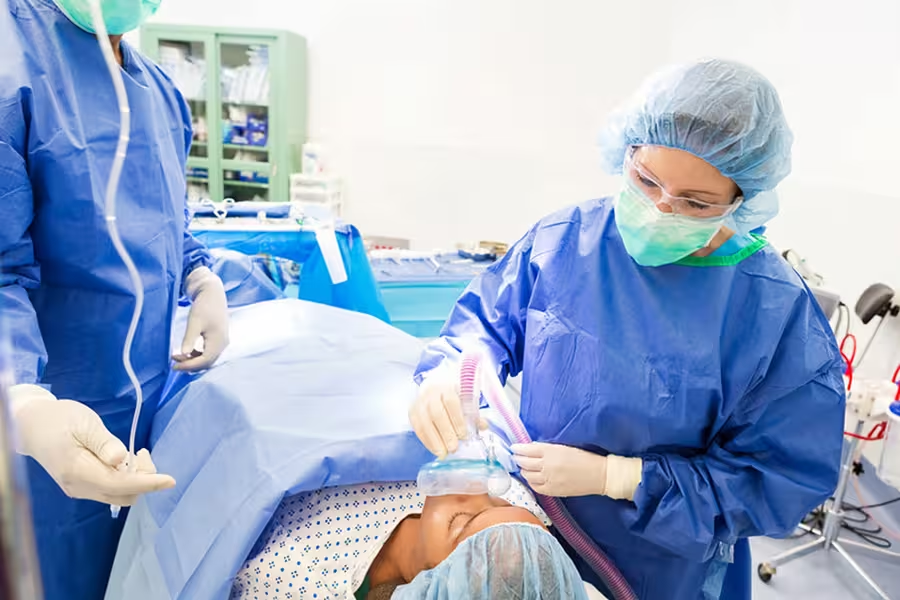
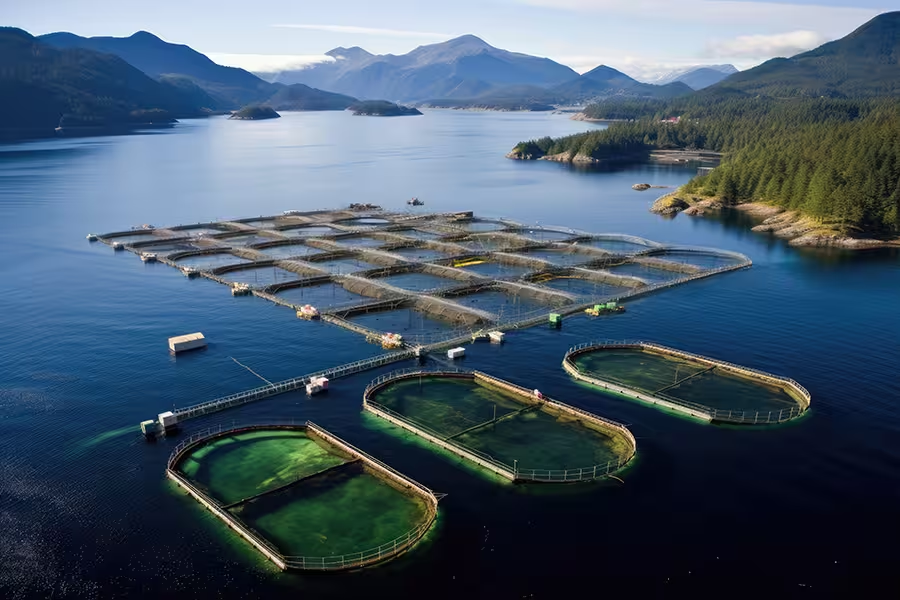
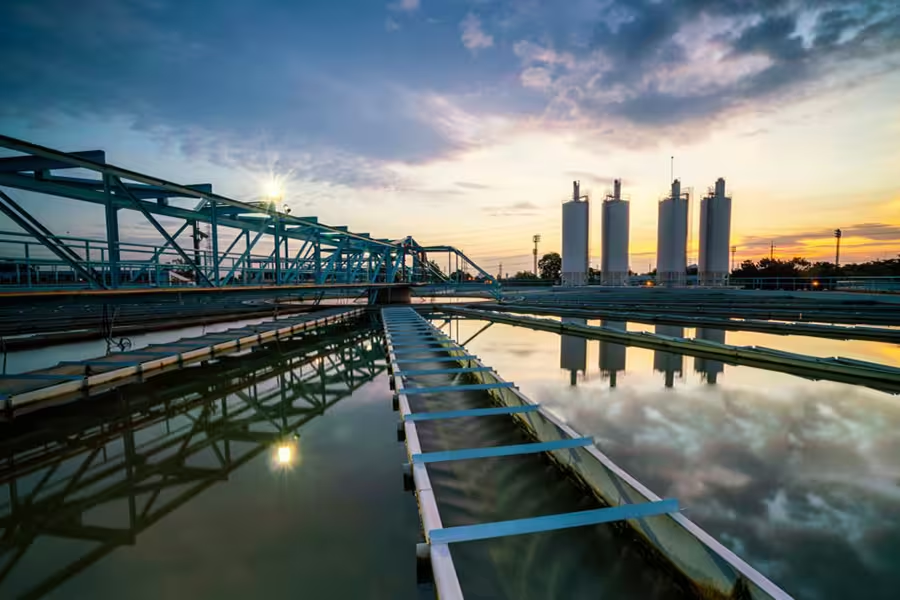
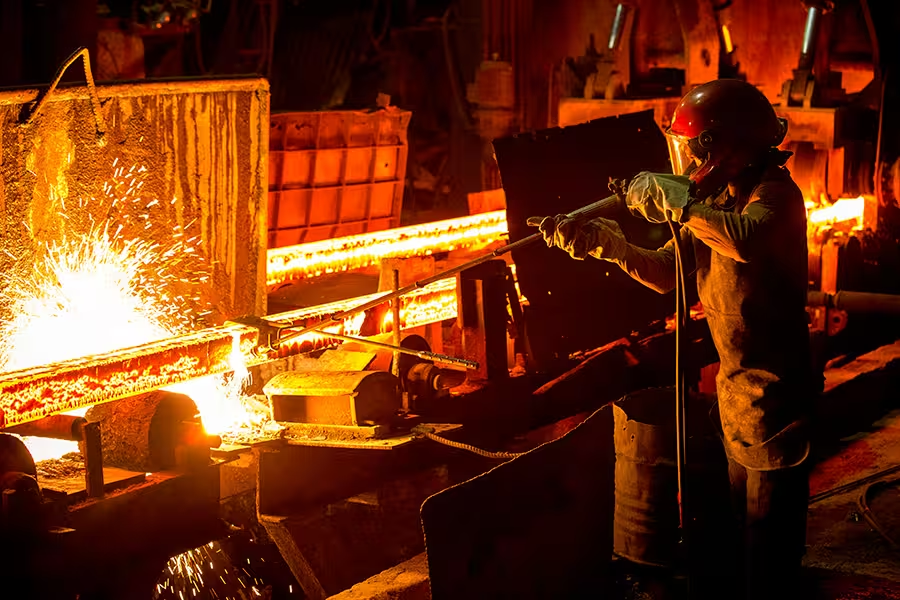
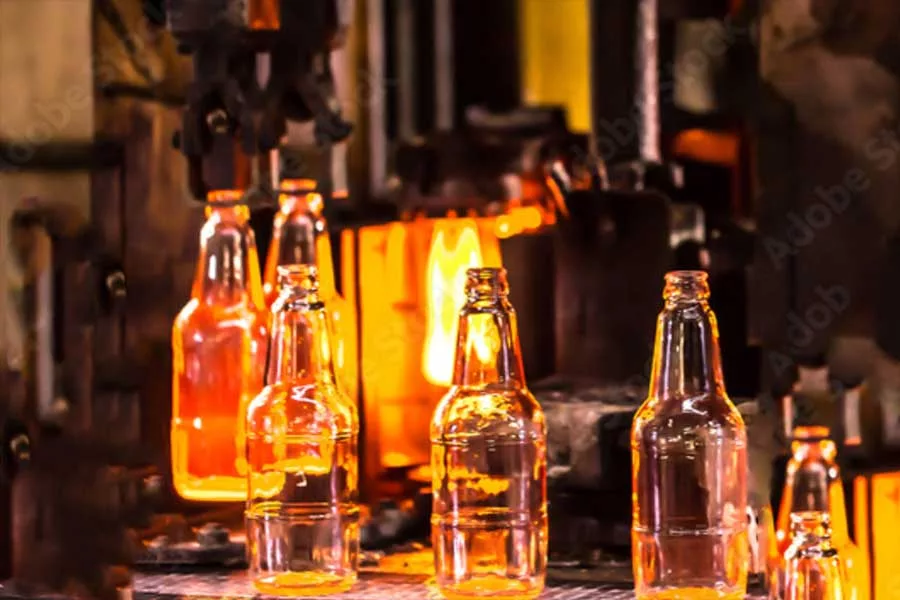
On-site oxygen at 90 % to 95 % covers a wide span of industries, from hospital supply and fish farming to wastewater aeration, ozone generation, biogas upgrading, metal and glass processing and gold leaching. The pages below show the typical purity target and integration pattern for each.


Engineering, Service & OEM Support
Engineering on Request. Sizing for an unusual flow profile, a purity target at the edge of the range, redundant skids for a critical oxygen supply, or a footprint that has to fit an existing plant room: these are handled by the engineering team in Krefeld, not by a request form that ends in a generic call-back. Talk to engineering about the requirement before the quote stage.
System Integration and Worldwide Service. An oxygen generator is one part of a larger compressed-air and gas installation, and the integration matters as much as the generator itself. Berg Kompressoren, the system-integration and service entity of the BERG Group, handles installation, commissioning and the worldwide service network, with a direct line back to the engineering team in Krefeld. See the full integration scope at berg-kompressoren.de.
OEM Programme. OXYBERG® generators are available under your own branding, with your RAL colour, logo, operator manual, HMI screens and an application-specific configuration. The technology stays the same, the visible product becomes yours.
Frequently Asked Questions about PSA Oxygen Generators
The zeolite molecular sieve separates oxygen from air by holding nitrogen back under pressure. Argon, which makes up just under 1 % of air, has almost the same molecular size and behaviour as oxygen, so it passes through the sieve together with the oxygen and cannot be removed by the pressure-swing step. That sets a natural ceiling of roughly 95 % for any PSA oxygen generator, OXYBERG® included. The 90 % to 95 % band covers the large majority of industrial, aquaculture and medical-grade oxygen demand. Where a process genuinely needs more, the argon has to be separated cryogenically, which is a different and much larger class of installation and is not part of the OXYBERG® range.
Wastewater treatment and aquaculture typically run at 90 % to 92 %. Metal, glass and oxidation processes usually call for 92 % to 94 %. Hospital supply outside the European Union is commonly delivered at 93 %, which matches European Pharmacopoeia Monograph 2455 (Oxygen 93). High-purity industrial processes use 94 % to 95 %. These are starting points; the right grade for a specific process is confirmed with the engineering team during sizing.
Across the OXYBERG® family it takes on the order of 11 m³ of compressed air to produce 1 m³ of oxygen, and that ratio stays roughly constant from 90 % to 95 %. As a concrete example, an OXYBERG® 1000 at 93 % delivers 11.1 Nm³/h of oxygen and draws 122.1 Nm³/h of compressed air. Because oxygen output falls as the purity grade rises, the cleanest way to keep air demand and generator size down is to specify the purity the process actually needs rather than the highest grade available.
The zeolite is regenerated on every cycle by dropping the pressure, so it is not consumed the way a filter cartridge is. Its working life depends almost entirely on the quality of the compressed air feeding it: liquid water, oil carry-over from the compressor or particulate from a worn filter are what shorten it. The standard OXYBERG® air-treatment chain (water separation, drying, fine and super-fine filtration and activated-carbon adsorption) is there to protect the sieve, and wear-part changes stay on planned, predictable intervals rather than emergency calls. Berg does not quote a fixed sieve lifetime, because in practice it is set by the installation and the air quality rather than by a catalogue figure.
No. Filters, valves and the zeolite molecular sieve itself are off-the-shelf components available on the open market. There is no Berg-exclusive spare-parts business after the purchase. The choice is deliberate: proprietary wear parts mean rising service costs and supplier lock-in over the life of the generator, and Berg’s position is that the value should sit in the engineering and the service, not in restricted spares.
Medical OXYBERG® configurations can be engineered for hospital oxygen-supply projects. Final suitability for patient supply depends on the complete system configuration, gas-quality verification, medical gas pipeline design, reserve/backup supply, national requirements, intended use and project-specific regulatory approval. 93 % O2 configurations can be engineered for projects requiring Oxygen (93 per cent), European Pharmacopoeia monograph 2455. Final gas quality must be verified for the delivered system and operating conditions. Applicable OXYBERG® pressure equipment is conformity assessed under PED 2014/68/EU using Modules B + D, notified body NB 2912. BERG GaseTech GmbH operates a quality management system certified to ISO 13485:2016. The certified scope covers development, production, distribution and commissioning of O2 PSA generators for the production of medical gases. Hospital deployments are typically supplied at the 93 % grade, most commonly outside the European Union. For application-specific documentation, engineering provides the relevant data package on request.