Industrial Oxygen Generator for On-Site Production
Produce oxygen on-site, directly from compressed air, with 18 OXYBERG® models covering five purity grades from 90 % to 95 % and output from 1.5 to 197.4 Nm³/h.
What Is an Industrial Oxygen Generator?
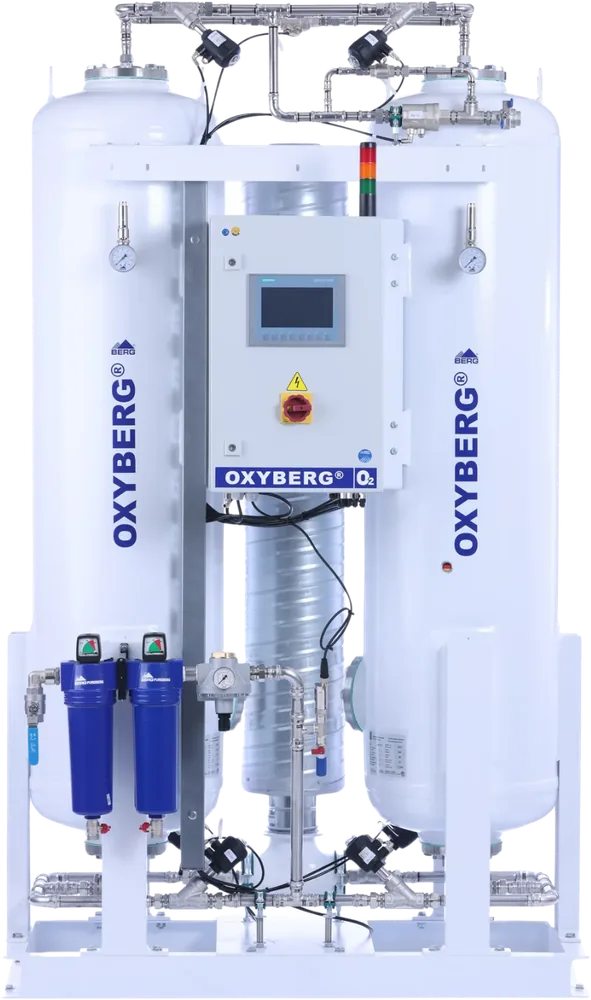
Ambient air contains roughly 21 % oxygen, 78 % nitrogen and around 1 % argon, plus traces of other gases. An industrial oxygen generator separates the oxygen from your existing compressed air using Pressure Swing Adsorption (PSA) and delivers it directly at the point of use. Instead of cylinder deliveries, liquid-oxygen tank refills or cryogenic logistics, you produce the gas continuously on your own premises: controlled, predictable and independent of external suppliers.
PSA generators achieve this with zeolite molecular sieves: under pressure, the zeolite adsorbs nitrogen and lets oxygen plus argon pass through. Because argon behaves chemically and physically much like oxygen, PSA technology is limited to approximately 95 % purity. For higher purities, vacuum-PSA or cryogenic air separation would be required, neither of which is part of the OXYBERG® portfolio. Within the 90 to 95 % range, however, PSA covers virtually every industrial, aquaculture and medical-grade oxygen application.
OXYBERG® Oxygen Generators
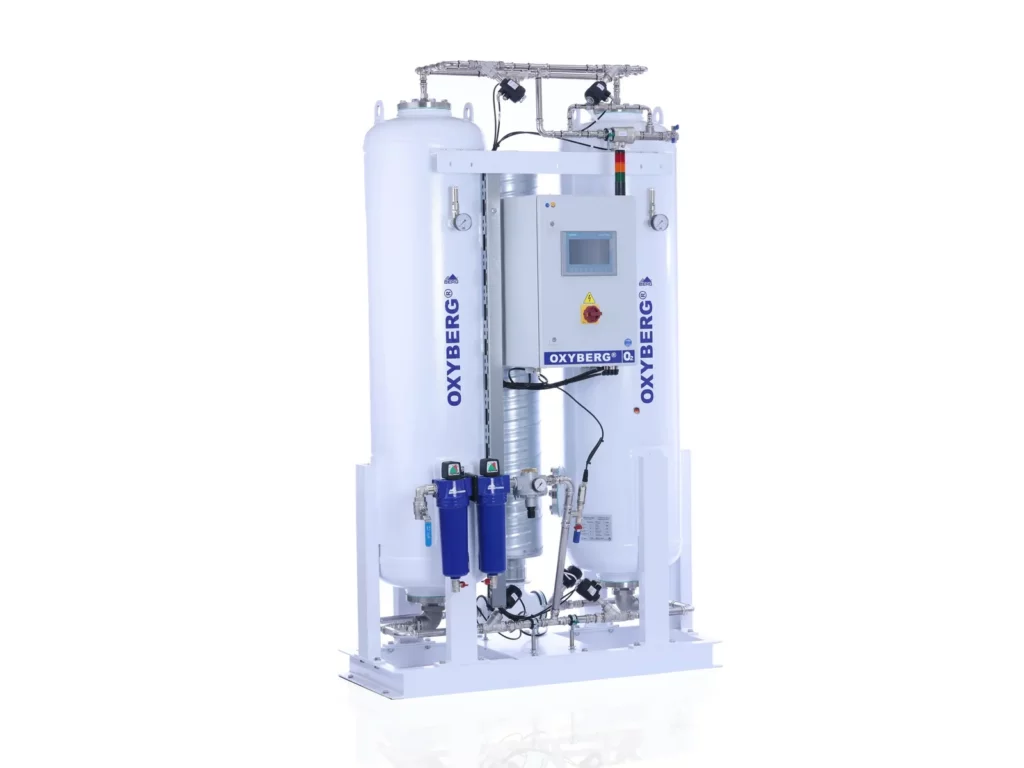
The OXYBERG® range covers the full bandwidth of industrial oxygen demand, from a few cubic metres per hour for laboratory and small-process applications up to plant-level supply for aquaculture farms, wastewater plants, hospitals and metal-industry sites.
Adjustable Purity
Five quality grades from 90% to 95%: same generator, configurable output, including Ph. Eur. 2455 (Oxygen 93).
Energy Efficiency
Low operating pressure and optimised cycle times keep electricity costs predictable across the lifecycle.
Compact Footprint
Skid-mounted design integrates into existing compressed-air systems with minimal plant-floor impact.
Worldwide Service
Delivered via the BERG Kompressoren partner network: a local point of contact and a direct line to German engineering.
Ready to find your oxygen generator?
Get a tailored quote based on your exact flow rate and purity requirements.
Why Generate Oxygen On-Site
Replace Recurring Supply Costs
Liquid-oxygen delivery bundles the gas itself with logistics, storage infrastructure, rental agreements and annual contract increases into a monthly invoice. On-site generation replaces those with predictable operating costs tied to electricity and compressed air. The typical return on investment compared to liquid-oxygen supply is two to three years.
Eliminate Supply-Chain Risk
External oxygen supply depends on delivery routes, contractual volume limits and depletion risk. An on-site OXYBERG® system removes that exposure: as long as electrical power and compressed air are available, the generator produces oxygen continuously, without waiting for the next truck.
Stable Purity, Stable Pressure
Cylinder changeovers and pressure drops introduce variability into sensitive processes such as aquaculture and wastewater treatment. On-site systems deliver a defined purity and stable outlet pressure tailored to the application, which gives operators tighter control and removes the variability that comes with external handling.
Smaller Footprint, Simpler Operations
Cylinder racks, cryogenic tanks and safety buffer zones take up plant space and require their own handling procedures. An on-site oxygen system integrates into the existing compressed-air infrastructure, which simplifies plant layout and removes the operational complexity that comes with bulk gas storage.
OXYBERG® Models: 18 Sizes, 5 Purity Grades
| Model | Oxygen Purity | ||||
|---|---|---|---|---|---|
| 90% | 92% | 93% | 94% | 95% | |
| OXYBERG® 500 | O₂2.1Air23.1 | O₂1.9Air20.9 | O₂1.7Air18.7 | O₂1.6Air17.6 | O₂1.5Air16.5 |
| OXYBERG® 600 | O₂2.9Air31.9 | O₂2.6Air28.6 | O₂2.4Air26.4 | O₂2.3Air25.3 | O₂2.2Air24.2 |
| OXYBERG® 700 | O₂4.9Air53.9 | O₂4.5Air49.5 | O₂4.2Air46.2 | O₂3.9Air42.9 | O₂3.8Air41.8 |
| OXYBERG® 800 | O₂6.1Air67.1 | O₂5.7Air62.7 | O₂5.5Air60.5 | O₂5.2Air57.2 | O₂4.9Air53.9 |
| OXYBERG® 900 | O₂9.2Air101.2 | O₂8.5Air93.5 | O₂8.2Air90.2 | O₂7.7Air84.7 | O₂7.3Air80.3 |
| OXYBERG® 1000 | O₂12.4Air136.4 | O₂11.6Air127.6 | O₂11.1Air122.1 | O₂10.5Air115.5 | O₂10.1Air111.1 |
| OXYBERG® 1100 | O₂13.8Air151.8 | O₂13.3Air146.3 | O₂12.8Air140.8 | O₂12.4Air136.4 | O₂12.1Air133.1 |
| OXYBERG® 1200 | O₂18.9Air207.9 | O₂18.1Air199.1 | O₂17.4Air191.4 | O₂16.8Air184.8 | O₂15.9Air174.9 |
| OXYBERG® 1300 | O₂24.8Air272.8 | O₂23.3Air256.3 | O₂22.1Air243.1 | O₂21.1Air232.1 | O₂20.3Air223.3 |
| OXYBERG® 1400 | O₂33.8Air371.8 | O₂33.2Air365.2 | O₂31.4Air345.4 | O₂30.1Air331.1 | O₂28.8Air316.8 |
| OXYBERG® 1500 | O₂44.6Air490.6 | O₂43.1Air474.1 | O₂41.6Air457.6 | O₂40.5Air445.5 | O₂39.1Air430.1 |
| OXYBERG® 1600 | O₂55.3Air608.3 | O₂53.2Air585.2 | O₂51.3Air564.3 | O₂49.6Air545.6 | O₂48.2Air530.2 |
| OXYBERG® 1700 | O₂65.8Air723.8 | O₂64.4Air708.4 | O₂62.1Air683.1 | O₂61.4Air675.4 | O₂59.8Air657.8 |
| OXYBERG® 1800 | O₂89.2Air981.2 | O₂86.2Air948.2 | O₂83.2Air915.2 | O₂81.0Air891.0 | O₂78.2Air860.2 |
| OXYBERG® 1900 | O₂110.6Air1,216.6 | O₂106.4Air1,170.4 | O₂102.6Air1,128.6 | O₂99.2Air1,091.2 | O₂96.4Air1,060.4 |
| OXYBERG® 2000 | O₂131.6Air1,447.6 | O₂128.8Air1,416.8 | O₂124.2Air1,366.2 | O₂122.8Air1,350.8 | O₂119.6Air1,315.6 |
| OXYBERG® 3000 | O₂165.9Air1,824.9 | O₂159.6Air1,755.6 | O₂153.9Air1,692.9 | O₂148.8Air1,636.8 | O₂144.6Air1,590.6 |
| OXYBERG® 4000 | O₂197.4Air2,171.4 | O₂193.2Air2,125.2 | O₂186.3Air2,049.3 | O₂184.2Air2,026.2 | O₂179.4Air1,973.4 |
| All flow values in Nm³/h. O₂ = product gas; Comp. Air = required compressed-air supply. | |||||
Values per cell: oxygen output (Nm³/h) / compressed-air demand (Nm³/h). Performance values are nominal. Actual performance depends on compressed-air quality, ambient conditions and system configuration. Detailed datasheets per model are available on request.
Why Choose a BERG Oxygen Generator
Standard Wear Parts, No Proprietary Lock-In
Once an OXYBERG® generator is installed, the wear parts are off-the-shelf and available on the open market. There is no proprietary supplier you have to come back to, no surprise on the second-year service invoice, and no leverage held by a single source. That keeps lifecycle costs predictable across the first five, ten and fifteen years of operation.
Made in Germany and Globally Competitive
Engineering and manufacturing happen in Germany. The price level still holds up against international peers, without giving up on certification depth or substance. Applicable OXYBERG® pressure equipment is conformity assessed under PED 2014/68/EU using Modules B + D, notified body NB 2912.
Talk to Engineering, Not a Call Centre
When sizing, integrating or troubleshooting an OXYBERG® system, you reach the engineering team directly, not a support tier two layers removed from the people who build the machine. Configurations beyond the standard range (purity, flow, pressure, footprint, integration) are handled on request. Worldwide service runs through BERG Kompressoren as the system-integration partner within the BERG Group, with a direct line back to Krefeld.
Three Years Standard, Up to Five With Service Contract
Every OXYBERG® generator comes with a three-year warranty as standard. In combination with a service contract, the warranty extends to up to five years. The worldwide service partner network gives you a local point of contact, with response times that match the region you operate in.
Oxygen Applications Across Industries
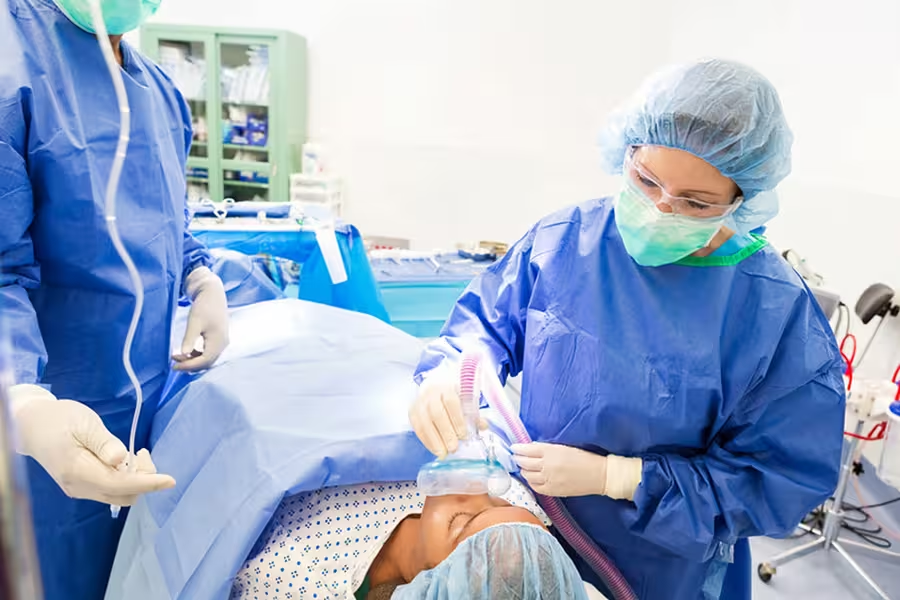
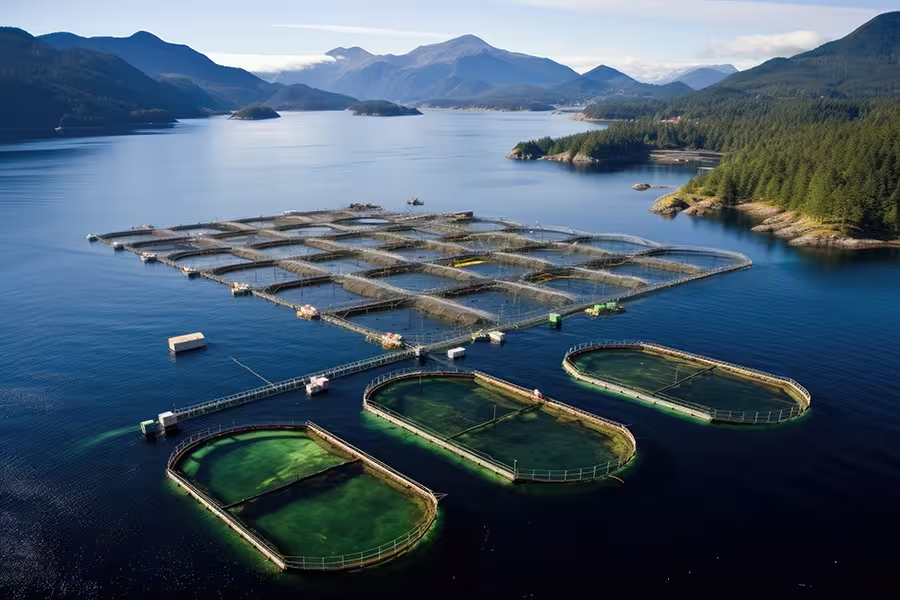
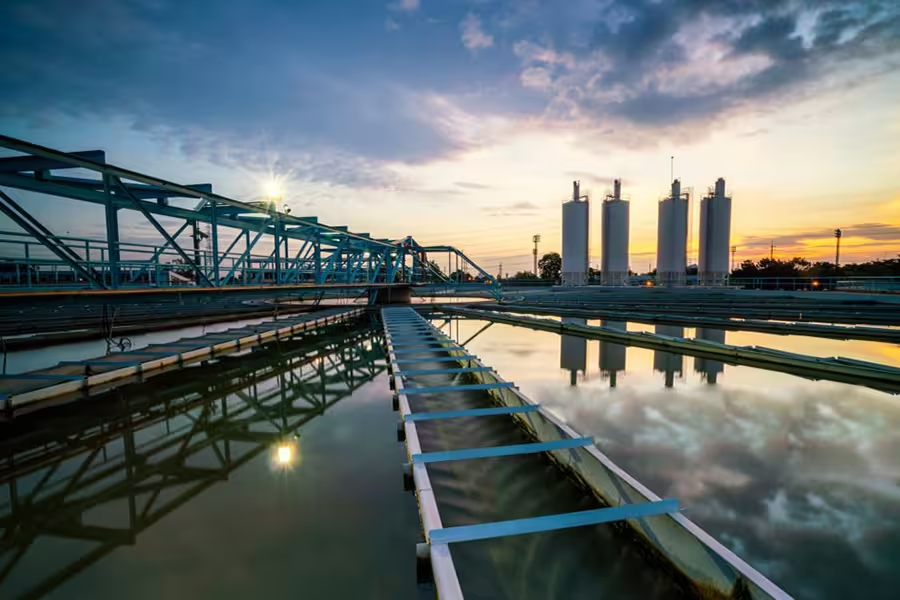
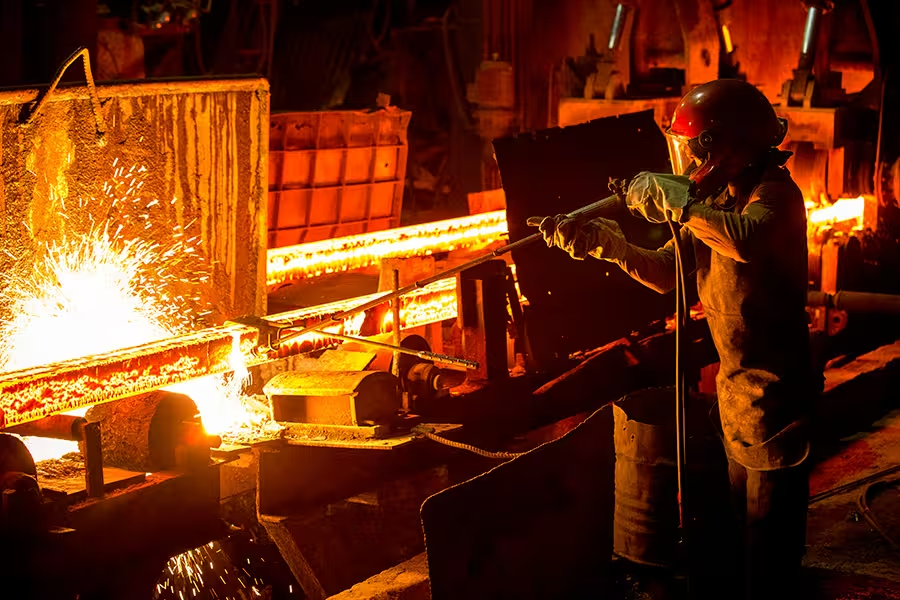
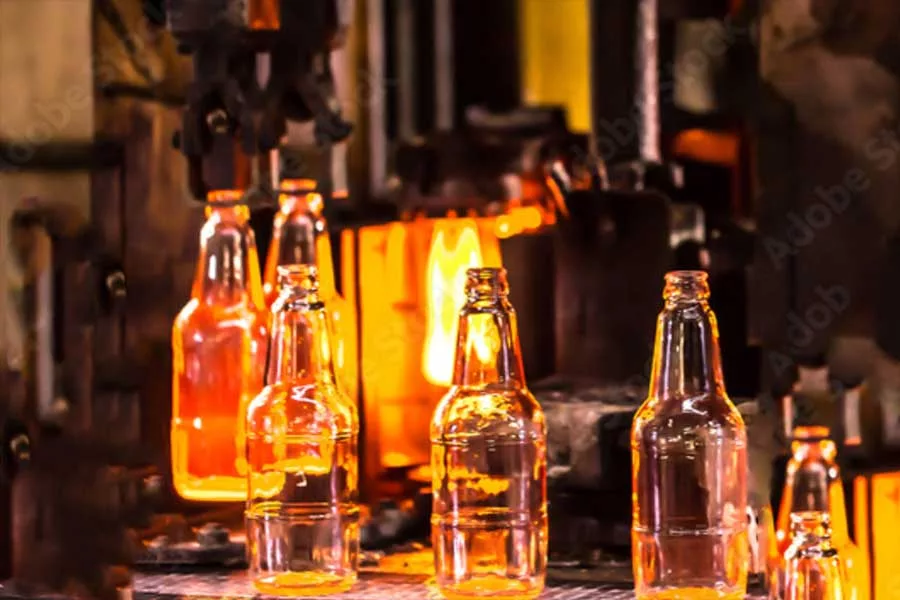
OXYBERG® generators run in nine industries, from hospital oxygen supply to gold leaching. Each industry has its own purity and flow profile, and each application page below covers the specifics.


Engineering, Service and OEM Support
Sizing, engineering and manufacturing of every OXYBERG® generator happen in Germany. Configurations beyond the standard range (adjusted purity, custom flow, specific pressure, restricted footprint, integration into an existing compressed-air system) are designed by the engineering team on request. For medical and pharmaceutical applications, that engineering work covers the compliance side as well: 93 % O2 configurations can be engineered for projects requiring Oxygen (93 per cent), European Pharmacopoeia monograph 2455. Final gas quality must be verified for the delivered system and operating conditions. The team supports customer-specific documentation requirements.
For complete turnkey oxygen packages (generator plus compressor, air treatment, storage and outlet regulation as a single skid-mounted or container-based solution), see BERG Kompressoren, the system-integration partner within the BERG Group. BERG Kompressoren handles on-site commissioning, operator training and the worldwide service partner network, with a direct line back to the headquarters.
OXYBERG® generators are also available under an OEM programme: under your own branding, in a custom RAL colour, with your logo and manual, your software and HMI, and an application-specific configuration where required. Details on the OEM programme are on the dedicated OEM page.
Frequently Asked Questions
An industrial oxygen generator separates oxygen from compressed air and delivers it directly at the point of use. The technology used in OXYBERG® generators is Pressure Swing Adsorption (PSA): compressed air passes through zeolite molecular sieves that adsorb nitrogen and let oxygen plus argon through. A depressurisation cycle then regenerates the sieve, and two adsorbers running in alternation give a continuous oxygen output. PSA reaches purities up to approximately 95 %.
The answer depends on the process. Wastewater treatment and aquaculture typically run at 90 % to 92 %. Industrial metal, glass and oxidation processes usually call for 92 % to 94 %. Hospital and medical applications outside the European Union are commonly supplied at 93 %, which matches the European Pharmacopoeia Monograph 2455 (Oxygen 93) specification. High-purity industrial processes use 94 % to 95 %. These are starting points. The right purity for a specific process is best confirmed with the engineering team during sizing.
For most continuous or high-volume applications, yes. The typical return on investment compared to liquid-oxygen supply is two to three years. The exact payback depends on the consumption profile, the current supply contract conditions and the local electricity cost. The on-site case becomes stronger when supply prices rise annually, when long-term tank contracts limit flexibility, or when supply chain disruptions threaten production continuity. We provide a TCO calculation tailored to your consumption data as part of the quote process.
Maintenance on an OXYBERG® generator is built around standard, off-the-shelf filter and consumable parts. There is no proprietary supplier you have to come back to, and no leverage held by a single source for the parts that wear over time. Service contracts cover scheduled maintenance and on-site visits where required, handled by the same engineering organisation that builds the generator and declares its conformity. Specific maintenance intervals and the scope of a service contract are tailored to the application and confirmed during the quote process.
Medical OXYBERG® configurations can be engineered for hospital oxygen-supply projects. Final suitability for patient supply depends on the complete system configuration, gas-quality verification, medical gas pipeline design, reserve/backup supply, national requirements, intended use and project-specific regulatory approval. 93 % O2 configurations can be engineered for projects requiring Oxygen (93 per cent), European Pharmacopoeia monograph 2455. Final gas quality must be verified for the delivered system and operating conditions. BERG GaseTech GmbH operates a quality management system certified to ISO 13485:2016. The certified scope covers development, production, distribution and commissioning of O2 PSA generators for the production of medical gases. Hospital deployments are typically supplied at the 93 % grade. Berg supports hospital customers internationally, with the BERG Kompressoren service network handling installation, commissioning and operator training on site.
Both technologies separate oxygen from compressed air using the same physical principle, but the products serve very different markets. An oxygen concentrator is typically a small, portable medical device prescribed for home oxygen therapy: patient use, prescription-based, single-litre flow rates. An industrial oxygen generator (such as OXYBERG®) is a fixed-installation system for industrial, aquaculture, wastewater, medical-facility or laboratory use, with flow rates from one to over a hundred normal cubic metres per hour. Berg builds industrial oxygen generators only, not portable concentrators. OEM page.